Most Instagram growth advice assumes unlimited time for content creation, which isn't realistic for a business owner juggling everything else. The good news is daily posting isn't actually required to build a real following. It's one input among several, and there are legitimate ways to get followers on Instagram without posting every day by focusing effort where it actually pays off.
This guide covers what to prioritize instead, so growth doesn't depend on constant content output.
Why Daily Posting Isn't the Only Path to Growth
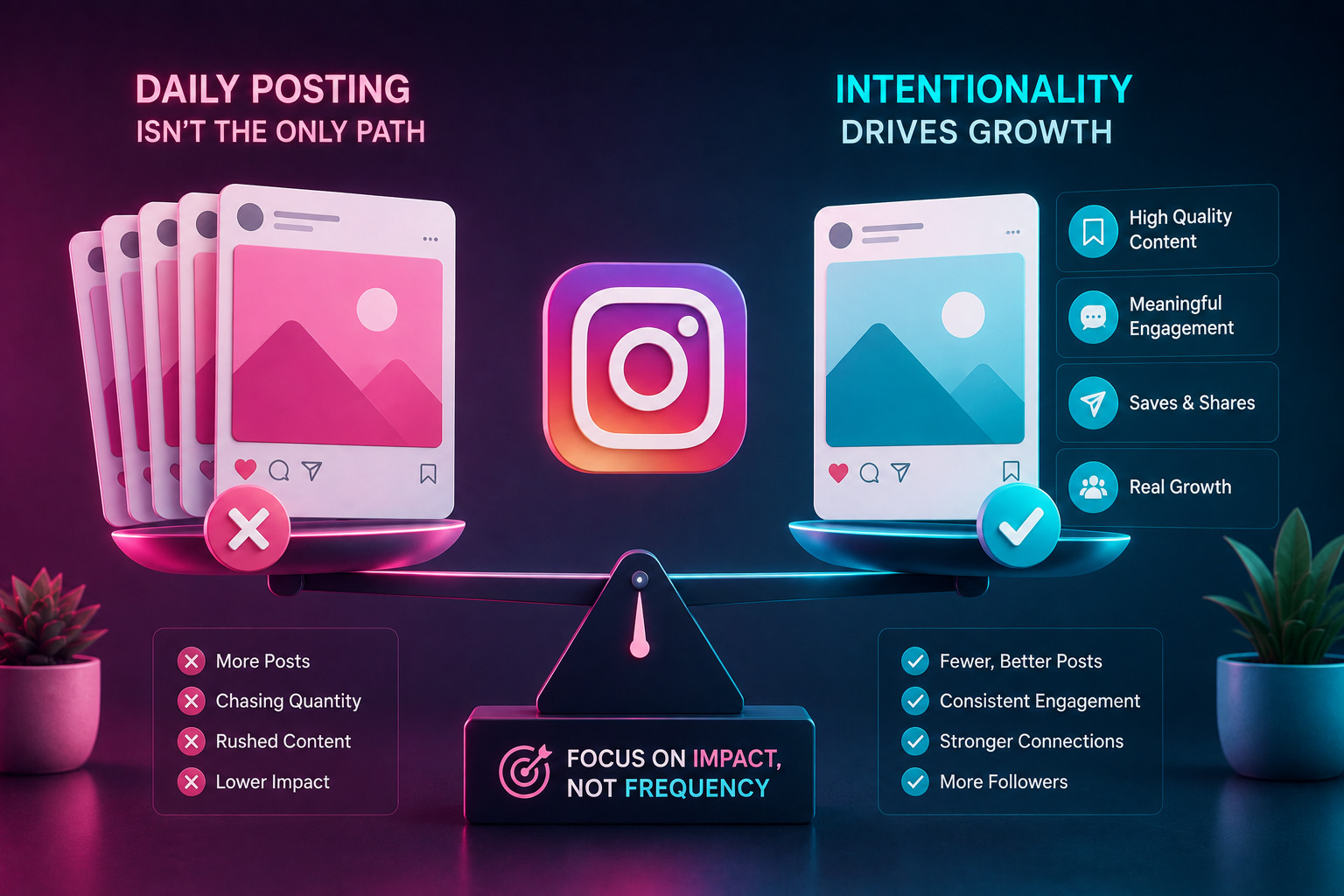
Instagram's algorithm weighs engagement, relevance, and content quality more heavily than sheer posting frequency. A well-made post that gets saved and shared can outperform five rushed posts published purely to hit a daily quota. For businesses trying to get followers on Instagram without posting every day, the shift is from volume to intentionality: fewer, better posts paired with consistent engagement elsewhere on the platform.
Batch Create Content in Advance
Rather than creating content daily, set aside a block of time weekly or biweekly to produce several posts at once, then schedule them out using a tool like Later, Buffer, or Meta's own Creator Studio. This keeps a consistent presence without requiring daily creative effort, and it tends to produce better content overall, since batching avoids the rushed, last-minute posting that daily schedules often lead to.
Focus Engagement Time on Comments and DMs Instead
Time spent replying to comments, answering DMs, and engaging on other relevant accounts can drive nearly as much growth as posting itself, without requiring new content. This is one of the more effective ways to get followers on Instagram without posting every day, since genuine engagement signals activity to the algorithm and puts your account in front of new people even between posts.
Make Use of Stories and Highlights
Stories can be posted with far less production effort than a polished feed post, a quick photo, a poll, a behind-the-scenes clip, and they keep an account visible between larger content pieces. Organizing evergreen Stories into Highlights on your profile also means new visitors see an active, informative presence even on days when nothing new goes up, which matters more than people expect for first impressions.
Repurpose and Remix Existing Content
A single well-performing post can be repurposed into a Reel, a Story series, or reused with a fresh caption weeks or months later. This significantly cuts down on how much new content is actually needed while still maintaining a presence. Reels specifically also allow remixing existing content or collaborating on someone else's post, which extends reach without requiring an entirely new production from scratch.
Lean on Collaborations and User-Generated Content
Partnering with another account through Instagram's Collab feature, or resharing user-generated content from customers, fills the content calendar without requiring original creation for every single post. Both tactics also tend to bring in an audience that's already engaged and relevant, which helps you get followers on Instagram without posting every day of new original material.

Optimize the Profile Itself
A strong bio, a clear profile photo, and a well-organized grid do a lot of work independently of how often new content goes up. Someone discovering the account through a hashtag, a mention, or a search decides whether to follow within seconds, and a clear, complete profile increases the odds of that decision going the right way regardless of posting frequency. This is one of the easiest, lowest-effort ways to get followers on Instagram without posting every day, since it's a one-time setup rather than an ongoing task.
Set Realistic Expectations for This Approach
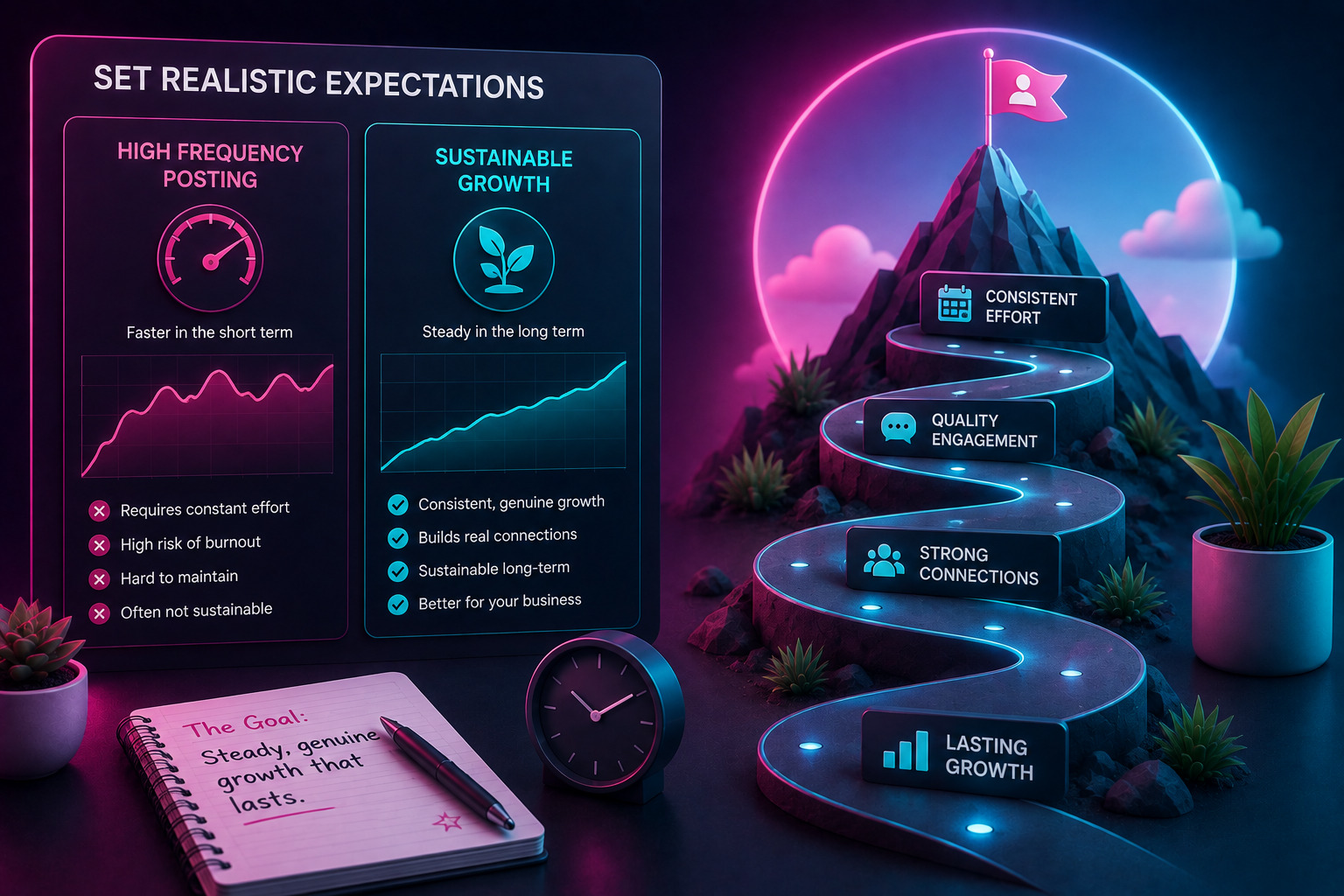
Growing without daily posting tends to be slower than an aggressive, high-frequency content strategy, and that's a reasonable tradeoff for a business without the bandwidth to sustain constant output. The goal isn't matching the pace of accounts posting multiple times a day, it's building steady, genuine growth in a way that's actually sustainable long-term rather than burning out after a few intense weeks.
Why This Approach Actually Works
The instinct to post daily usually comes from a fear that any gap will tank visibility, but Instagram's algorithm cares more about relevance and engagement history than raw frequency. Accounts that manage to get followers on Instagram without posting every day typically do it by making the content that does go up count more, backed by consistent activity in comments, DMs, and Stories that doesn't require new feed posts at all. Over time, this tends to be more sustainable than an aggressive daily schedule that's hard to maintain alongside running an actual business.
Tools That Make This Easier
Scheduling tools like Later, Buffer, or Meta's Creator Studio let a batch of content get planned and queued in one sitting, removing the need to log in and post manually each day. Canva and similar design tools speed up creating a handful of polished posts at once rather than scrambling for something new daily. And Instagram's own Insights tool helps confirm whether a lighter posting schedule paired with strong engagement is actually working, so adjustments can be made based on real data rather than assumption.
Common Mistakes to Avoid
A frequent mistake is disappearing entirely for long stretches, since even a lighter schedule needs some consistency to stay visible to the algorithm and to followers. Another is neglecting Stories and engagement while focusing purely on feed posts, missing out on some of the lowest-effort, highest-impact activity available. Some accounts also batch content once and never revisit performance data, missing the chance to refine what's actually working. And a few assume this approach means no strategy at all, when it actually requires more intentional planning, not less, to make each less-frequent post count.
How This Fits Into a Broader Strategy
A lighter posting cadence works especially well paired with strong engagement habits and a clear content plan rather than as a standalone approach. Businesses balancing this alongside other priorities often benefit from social media marketing services to keep the batching, scheduling, and engagement consistent without requiring daily hands-on time. Our companion guides on getting followers without following back and growing without following random accounts cover additional tactics that pair well with a lower-frequency posting approach.
Frequently Asked Questions
How often should I post if not every day? There's no universal number, but two to four times a week, paired with regular Stories and engagement, tends to maintain visibility without requiring a daily content commitment.
Will growth be slower without daily posting? Often somewhat, yes, though the gap narrows significantly when engagement and Stories activity stay consistent between feed posts. The tradeoff is usually worth it for sustainability.
Is batching content actually effective, or does it look less authentic? Batching affects production timing, not authenticity. Audiences generally can't tell the difference between content made the day of posting and content made a week earlier, as long as it stays timely and relevant.
Does engagement really substitute for posting frequency? To a meaningful degree, yes. Comments, DMs, and interacting with other accounts keep a profile active in the algorithm's eyes even without new posts going up daily.
What's the biggest risk with a lower posting frequency? Going silent for too long. A lighter schedule still needs some baseline consistency, since long gaps with no activity at all can hurt visibility more than infrequent but steady posting.
Key Takeaways
- Daily posting isn't required to grow on Instagram, engagement and content quality matter more than sheer frequency
- Batching content in advance keeps a consistent presence without daily creative effort
- Time spent on comments, DMs, and Stories can drive growth even between posts
- Repurposing content and leaning on collaborations reduces how much original content is actually needed
- This approach trades some speed for sustainability, which is often the right tradeoff for a business without unlimited content bandwidth