"Can you write some content for our website?" and "Can you write SEO content for our website?" sound like the same request. They're not, and businesses that treat them as interchangeable usually end up disappointed either way: either with beautifully written pages nobody finds, or with keyword-stuffed pages nobody wants to read.
This guide breaks down what actually separates SEO content writing from general content writing, when each one makes sense, and how to figure out which your business needs right now.
What is content writing?
Content writing is the broad craft of producing written material for a brand: website copy, brochures, email newsletters, social captions, internal documents, scripts. The priority is clear, engaging writing that serves the immediate purpose, whether that's informing, persuading, or entertaining. A content writer might never think about search rankings at all, and for plenty of writing tasks, they shouldn't have to.
What is SEO content writing?
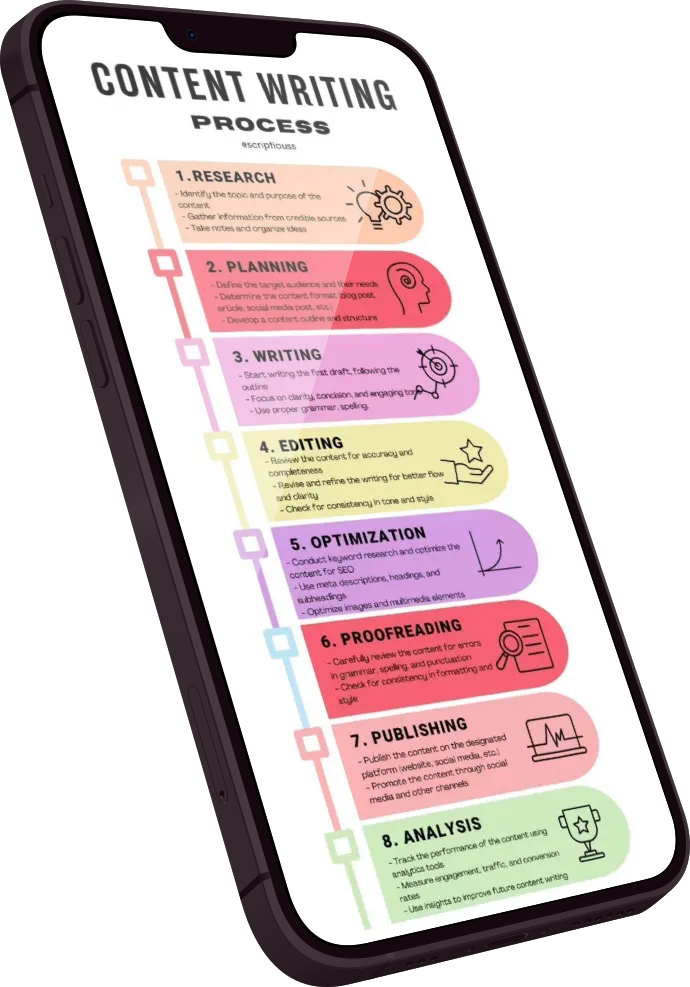
SEO content writing is a specific application of content writing aimed at ranking in search engines and answering a specific search query. It starts with keyword research instead of a topic idea, and every piece is built around a focus keyphrase with real search volume. The final piece still needs to read well, but it's also structured with headers, internal links, and on-page elements search engines rely on to understand and rank it.
Providers offering SEO content writing services typically combine both skills: writing that holds a reader's attention and enough SEO knowledge to make sure the piece actually gets found.
The core differences
| Content Writing | SEO Content Writing | |
|---|---|---|
| Starting point | A topic idea or brand message | Keyword research |
| Primary goal | Inform, persuade, or entertain | Rank in search and answer a query |
| Structure | Flexible, whatever fits the message | Headers, keyphrase placement, meta data |
| Success measured by | Engagement, brand tone, clarity | Rankings, organic traffic, conversions |
| Typical use | Brochures, ads, social captions, scripts | Blog posts, landing pages, guides |
Neither approach is "better." They're built for different jobs, which is exactly why mixing them up causes problems.
Why Do The Difference Matter?
Hiring a content writer for a task that needed SEO content writing usually means getting well-written pages that never show up in search results, since nobody researched what people were actually searching for or set up the on-page details that help Google understand the page. Going the other direction, hiring an SEO-only writer for a brand campaign or ad copy can produce keyword-heavy text that reads stiff and doesn't actually persuade anyone.
Knowing which one you need before you hire saves money and prevents the common complaint of "we published content and nothing happened."
Which do you need? A quick way to decide
Ask what the piece is actually for.
- You need SEO content writing if: the goal is organic traffic from Google, the piece will live on your blog or website long-term, or you want it to rank for a specific search term.
- You need general content writing if: the piece is for social media, email, an ad, a brochure, or anywhere search rankings genuinely don't apply.
- You often need both: most businesses use general content writing for brand voice and campaigns, and SEO content writing for the blog and core website pages that need to be found in search.
Benefits of SEO Content Writing Specifically
Compounding traffic. A well-ranked article keeps bringing visitors long after it's published, unlike an ad or a social post that stops working once it's off the feed.
Qualified visitors. Traffic from a search query someone typed themselves tends to convert better than a cold audience, since they're already looking for an answer.
Longer shelf life. A good SEO article can stay relevant and ranking for years with occasional updates, while most general content has a much shorter useful life.
Challenges And Limitations
SEO content writing takes longer to show results than general content, often three to six months before meaningful traffic shows up. It's also harder to write well, since balancing keyword strategy with genuinely engaging prose is a real skill, not something every good writer picks up automatically. And it's not the right fit for every piece. Forcing SEO structure onto an email newsletter or an internal memo just makes it clunky.
Common Mistakes Businesses Make
The most frequent mistake is treating every writing task the same way, either applying heavy SEO structure to content that never needed it, or skipping keyword research on a blog post that was always meant to rank. Close behind that: hiring based on writing samples alone without asking whether the person or agency actually does keyword research, and assuming a strong writer automatically understands SEO, which isn't always true.
Best Practices
- Match the writer or service to the task. Use an SEO article writing service for blog content meant to rank, and a general content writer for campaigns and brand voice
- Always start SEO pieces with keyword research, never a guess
- Keep even SEO-focused writing conversational. Content that reads naturally holds attention longer than content that reads like it was built for a search engine
- Add internal links between related pieces, like linking this comparison to our guide on SEO content services, so readers and search engines can find more relevant content
- If budget only allows for one, prioritize SEO content writing for your blog and core pages, since that's where organic traffic actually comes from
What It Costs
Pricing depends on scope and provider. General content writing (social captions, email copy) tends to be priced per piece or per project and is usually cheaper, since it skips the research phase. SEO content writing costs more upfront because of the keyword research and on-page setup involved, though AI SEO content writing service pricing per article in 2026 has brought that cost down somewhat, especially when AI handles part of the drafting with a human editor reviewing the final piece. Full-service SEO writing companies that bundle strategy, research, and writing together typically sit at the higher end, but often deliver the strongest long-term return.
Tools and Resources
For SEO content writing specifically, Google Keyword Planner and Keyword Surfer help with initial keyword research, Google Search Console shows which queries are already sending traffic, and WordPress SEO plugins like Yoast or Rank Math are useful for anyone applying WordPress SEO tips for beginners while managing their own site. General content writing leans more on style guides, brand voice documents, and editorial calendars than SEO-specific tools.
Either type of writing also performs better alongside social media marketing services, since a blog post or brand piece gives you material to share and repurpose across other channels instead of starting from scratch each time.
Future Trends
As AI assistants and AI-powered search summarize more answers directly, the line between "content that reads well" and "content that ranks well" is starting to blur. Search engines increasingly favor content that's clearly structured and genuinely useful over content that's purely keyword-optimized, which means the writing skill behind general content writing is becoming more valuable inside SEO content writing too, not less. Expect fewer purely "SEO-only" writers over time and more hybrid providers who handle both well.
Frequently Asked Questions
Is SEO content writing just content writing with keywords added in? Not quite. The keyword research happens before the writing starts and shapes the entire piece, including structure and on-page setup, rather than being sprinkled into an already-finished draft.
Can one writer do both well? Yes, and the best ones do. But it's a broader skill set than either task alone, so it's worth confirming during hiring that a writer or service actually handles keyword research and on-page SEO, not just the writing itself.
Does my business blog need SEO content writing? If you want the blog to bring in organic search traffic, yes. If the blog exists purely for brand storytelling with no expectation of search rankings, general content writing may be enough.
Is SEO content writing more expensive than regular content writing? Usually somewhat, because of the added research and optimization work, but it tends to pay for itself over time through the recurring, unpaid traffic it brings in.
How do I know if a provider offering SEO content writing services actually knows SEO? Ask whether keyword research is part of their process, whether they can show examples of content that ranks, and whether they set up on-page elements like meta descriptions and internal links, not just the article text.
Key Takeaways
- Content writing serves broad brand and communication goals; SEO content writing is built specifically to rank and answer search queries
- Most businesses need both, just for different purposes
- SEO content writing costs more upfront but tends to deliver stronger long-term returns through organic traffic
- Matching the right type of writing to the right task saves money and avoids the "we published content and nothing happened" problem
- The line between the two is blurring as AI-powered search rewards genuinely useful, well-structured writing over pure keyword optimization