Have you ever searched for a quick question on Google and noticed a neat drop-down menu right at the top of the search results answer your query instantly? That is Google’s People Also Ask (PAA) feature, or a rich snippet powered by FAQ schema markup.
For business owners and content creators, landing your content inside those coveted FAQ spots is pure gold. It increases your search visibility, boosts organic click-through rates, and positions your brand as an instant authority. But Google doesn't just randomly pick answers to highlight—there is a specific science to structuring your Frequently Asked Questions so search engines can read, understand, and feature them.
Whether you rely on an SEO article writing service or craft content in-house, structuring your FAQs correctly is one of the highest-ROI adjustments you can make to your content strategy. Let’s dive into how you can structure your FAQ questions so Google takes notice and displays them proudly on Page One.
Why Google Loves Well-Structured FAQ Content
Google’s ultimate goal is to deliver the fast, accurate, and relevant answers searchers are looking for. When you organize your content into clear questions and direct answers, you make Google’s job significantly easier.
When search bots crawl your website, structured FAQs help them:
- Understand Context: FAQs clearly state the topic and the explicit search intent behind it.
- Extract Featured Snippets: Clean, succinct answers are prime candidates for position-zero search results.
- Enhance Rich Snippets: Structured data enables Google to add expandable Q&A accordions directly under your page title in search engine results pages (SERPs).
By optimizing your FAQs, you are effectively translating your website's knowledge into a language that Google’s algorithm loves to process and reward.
1. Start with Intent-Driven Keyword Research
Before you start writing questions, you need to know what your audience is actually typing into search bars. Guessing what people want to know rarely yields top SERP rankings.
Effective FAQ creation relies on targeted research. You want to align your questions with the specific queries real users ask throughout their buyer journey.
- Analyze Search Intent: Are your users looking for quick WordPress SEO tips for beginners, or are they actively seeking paid professional solutions like SEO blog writing services?
- Leverage PAA Snippets: Type your main topic into Google and look closely at the "People Also Ask" section. These are actual queries Google considers directly related to your primary topic.
- Combine Informational and Commercial Keywords: Blend general educational queries with service-focused keyphrases. For instance, pairing social media troubleshooting questions alongside queries about social media marketing services for small businesses ensures you catch audience members at different funnel stages.
2. Craft Clear, Natural, and Specific Questions
The way you phrase your questions matters just as much as the answers you provide. Google prioritizes natural, conversational language that mirrors how real people speak and search.
Use Complete Question Formats
Avoid vague headings like "Pricing Information" or "Instagram Growth." Instead, frame them as actual questions:
- Instead of: "Instagram Following Strategies"
- Use: "How to Get Followers on Instagram Without Following" or "How to Get More Instagram Followers Organically?"
Direct Match Search Queries
Whenever appropriate, use high-volume search phrases as exact or near-exact question titles. Questions like "How to Do Keyword Research for Multiple Locations?" directly target what users type into search engines, making it effortless for Google to match your content to search intent.
3. Structure Answers for Maximum Readability
Once you have established strong questions, your answer formatting determines whether Google will display them. Search engines prioritize clear, structured, and straightforward answers.
The Inverted Pyramid Method
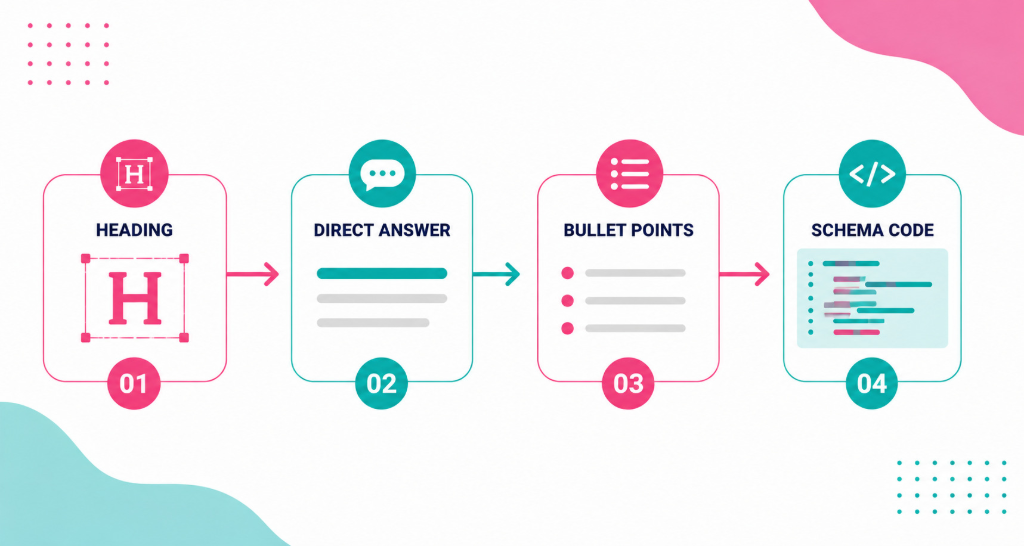
Place the core answer in the very first sentence. If someone asks how to conceal their list on social media, immediately address how to hide followers on Instagram in a concise 30-to-50-word definition before breaking down secondary steps. Google frequently extracts these brief introductory blocks straight into featured snippets.
Use Scannable Bullet Points
When answers involve multi-step processes—such as explaining how to create a digital marketing strategy for small business—break the answer down into ordered or unordered lists. Google loves listicle formats for featured snippets because they offer clean visual steps for searchers.
4. Cover the Topics Your Audience Is Asking For
To build comprehensive FAQ sections that hold search authority, tackle the specific pain points and trending questions within your niche. Here are three key areas every business should cover:
Social Media Growth & Privacy
Social media queries carry massive search volume. Addressing practical user questions builds high-top-of-funnel traffic:
- How to build genuine engagement using social media content ideas for small business.
- Technical platform questions, such as how to get followers on Instagram without posting or account privacy settings like hiding following lists.
- Actionable social media marketing tips for small business owners looking to scale organically.
Search Engine Optimization (SEO) Basics
Search visibility questions are always in demand. Provide straightforward answers on:
- Essential WordPress SEO tips for beginners to get websites properly indexed.
- How to conduct multi-location keyword research for local SEO campaigns.
- Why investing in SEO content writing services speeds up search indexing and organic traffic growth.
Pricing and Service Expectations
Searchers frequently ask about service structures and costs before making hiring decisions. Be transparent about:
- What is included when hiring a social media marketing agency services team.
- Comparing full-service strategy costs against specialized SEO writing companies.
- Current market trends, such as AI SEO content writing service pricing per article 2026 models versus human-driven strategic content.
5. Implement Structured Data (FAQ Schema)
Writing great questions and answers is only half the battle; telling Google explicitly that your content is an FAQ section completes the job. This is accomplished using FAQ Schema Markup.
FAQ schema is a snippet of code (JSON-LD format) added to your page backend that directly informs search engine crawlers: "This specific text is a question, and this specific text is the official answer."
Benefits of FAQ Schema:
1. SERP Dominance: Pages with FAQ schema often get expandable drop-down accordions directly beneath their main Google listing, taking up significantly more visual real estate on the results page.
2. Higher Click-Through Rates (CTR): Occupying more visual space and offering immediate answers builds trust and encourages searchers to click through to your page for details.
3. Voice Search Readiness: Digital assistants like Google Assistant rely heavily on structured schema markup to read direct answers aloud to voice search users.
Note: Always ensure that the questions and answers coded into your schema markup match the visible text on your webpage word-for-word. Google penalizes sites that hide different text in schema code.
6. Avoid Common FAQ Structuring Mistakes
Even well-intentioned sites miss out on snippet opportunities due to simple formatting errors. Steer clear of these common pitfalls:
- Avoid Overly Salesy Answers: Google prefers objective, helpful answers. Keep your FAQ answers focused on genuinely resolving the user's question rather than delivering a hard sales pitch. Save marketing messaging for your primary page copy and dedicated call-to-action sections.
- Don't Bundle Multiple Questions Together: Keep each FAQ heading focused on one specific concept. Combining two different queries into a single heading confuses search bots trying to match specific intent.
- Don't Hide FAQs in Accordions Without Schema: While expandable visual accordion menus keep pages clean for human visitors, make sure search bots can crawl the text and that schema markup is properly attached to the backend code.
Mastering FAQ Structure for Search Dominance
Structuring your FAQ questions so Google shows them comes down to clarity, precision, and technical alignment. By conducting intent-driven research, using direct full-question headings, providing concise upfront answers, and tagging your page with FAQ schema markup, you make your content irresistible to search engines.
Consistently applying these structured content principles will help you capture rich snippets, outperform competitors in search visibility, and draw a steady stream of qualified traffic straight to your website.
Ready to Turn Your Content Into a Google Traffic Magnet?
Formatting and optimizing content for top search engine rankings takes time, strategy, and consistent execution. Whether you need compelling SEO friendly content writing services, a comprehensive digital growth strategy, or full-scale social media marketing services, Digitory Marketing is here to scale your online presence.
Stop letting your competitors take up prime Page One real estate! Contact Digitory Marketing today to get started with tailored SEO blog writing services and high-converting marketing strategies built to drive real, measurable results for your business.