Introduction
If you have ever gone quiet on social media for a few weeks, you have probably wondered what it actually did to your numbers. Did people unfollow you? Did the algorithm punish you? Will your next post disappear into a void? These questions matter more than they used to, because so much of modern marketing, sales, and personal branding runs through social platforms. social-media marketing agency services
The honest answer is that when you stop posting on social media for a month, very little happens to your actual follower count, but a lot happens to your reach, your engagement, and how the algorithm treats you when you come back.
This article breaks down exactly what changes, what does not, and how to protect your growth if you need to step away, whether the break is planned or life simply gets in the way for a few weeks.
What Happens When You Stop Posting on Social Media for a Month
Most people expect a dramatic follower drop the moment they stop posting on social media. In reality, your follower count stays fairly stable over a single month. People rarely unfollow an account just because it went quiet. Unfollows tend to happen for other reasons: irrelevant content, a controversial post, or simply forgetting the account exists over a much longer stretch of time, usually several months or more.
What does change quickly is visibility. Social platforms are built to reward activity. The moment you stop posting, the algorithm has nothing new to show your audience, so your account slowly fades from feeds, Explore pages, and recommendation tabs.
Your existing followers do not disappear, but fewer of them see anything from you, and new people stop discovering you altogether. So, the real story is not “you lose followers,” it is “you lose momentum.”
Why Posting Consistency Matters for Social Media Growth
Consistency is not about posting every single day. It is about giving the algorithm a predictable pattern of activity so it can keep testing your content with new audiences. Every platform, whether it is Instagram, TikTok, LinkedIn, or Facebook, uses recent engagement signals to decide who sees your next post. When you stop posting on social media, you stop generating those signals, and the platform has less reason to push your content anywhere.
This matters for brands and creators for a practical reason: growth compounds. A steady posting schedule builds a habit loop with your audience. They start expecting your content at certain times, and that expectation drives return visits, saves, and shares.
Break the pattern for a month, and you are not just missing a few posts, you are resetting the habit you spent weeks or months building.
How the Algorithm Reacts When You Stop Posting on Social Media
Every major platform uses some version of a recency and relevance model. Recent activity, both from you and from your audience's engagement with you, feeds directly into how widely your content gets distributed. When an account goes silent, most platforms interpret that as reduced relevance and quietly deprioritize it in ranking calculations.
This does not mean you get an “algorithm penalty” in the punitive sense many marketers describe online. There is no evidence that platforms actively suppress accounts as punishment for taking a break. What actually happens is simpler: the algorithm has fewer fresh data to work with, so it defaults to caution. Your first post back after a month away will likely reach a smaller slice of your audience than a post from an account that never stopped.
The good news is that this effect is temporary. Consistent posting for a couple of weeks after your return is usually enough to rebuild momentum.
It also helps to understand that different platforms weigh inactivity differently. Instagram and TikTok lean heavily on short-term engagement signals, so a gap tends to show up quickly as lower reach on your first few posts back. LinkedIn tends to be more forgiving of gaps for individual profiles, since its feed logic often favors comments and shares over pure posting frequency, but company pages can still see a noticeable dip in impressions.
Facebook Pages, similarly, weigh recent page activity alongside audience response, so a quiet page competes with more active ones for the same feed slots. Knowing which platform, you paused on can help you set realistic expectations for how fast you will recover.
Follower Count vs Engagement: What Actually Drops First
This is one of the most misunderstood parts of the conversation. Your follower count is a lagging indicator. It moves slowly and is influenced by long-term patterns, not short breaks. Engagement, on the other hand, is a leading indicator, and it reacts almost immediately.
Here is the typical order of events after you stop posting on social media for a month:
- Reach and impressions drop first, often within the first one to two weeks.
- Engagement rate (likes, comments, shares relative to followers) drops next, since fewer people see your existing content.
- Profile visits and link clicks decline as a result of lower visibility.
- Follower count stays mostly flat, with only a small, gradual decline from normal account cleanup and inactive user churn.
Brands that only watch follower count often miss the real damage happening underneath: a shrinking reach that makes every future post work harder to get seen.
Are There Any Benefits to Taking a Social Media Break?
A short pause is not always bad. Some brands and creators use a deliberate break to rework their content strategy, refresh their visuals, or avoid burning out their team. If the break is intentional and short, usually under two to three weeks, the recovery is fast once posting resumes.
The benefit is less about the platform and more about quality. Coming back with a clearer content plan often performs better than forcing out mediocre posts just to maintain a streak. The key is treating the break as a strategic pause, not a disappearance. Letting your audience know you will be back, or scheduling a few posts to keep some activity flowing, softens the impact considerably.
For small teams and solo creators especially, a planned pause can also prevent the kind of burnout that leads to a much longer, unplanned disappearance later. A brand that posts sporadically for a year because the team is stretched thin usually loses more ground than one that takes a clearly communicated three-week break, resets its content plan, and comes back posting consistently.
Audiences tend to be far more forgiving of a short, intentional gap than they are of months of inconsistent, low-effort posting.
Common Mistakes Brands Make After a Posting Gap
A lot of the damage from a content gap comes from how brands handle the comeback, not the gap itself. A few patterns show up repeatedly: should you handle social media yourself or hire
- Posting five times in one day to “catch up,” which can flood follower feeds and trigger reduced reach for all of them, not just the extra posts.
- Ignoring comments and messages that piled up during the gap, which signals low engagement to the algorithm.
- Coming back with a completely different content style without explaining the shift, which confuses returning viewers.
- Skipping analytics review before restarting, so the same mistakes that led to burnout or inconsistency happen again.
- Assuming the follower count is the only metric that matters and missing the bigger drop in reach and engagement.
Avoiding these mistakes matters more for recovery speed than anything else on this list.
Best Practices to Protect Your Follower Count During a Break
If you know a gap is coming, whether due to a product launch pause, a team transition, or simple bandwidth issues, a few steps make a real difference:
- Batch and schedule a handful of posts in advance using a scheduling tool, even if it is just one post a week, to keep some activity going.
- Respond to comments and messages on existing posts during the break, since interaction signals still count even without new content.
- Post a short “we'll be back” update or story if the break is longer than two weeks, so your audience is not caught off guard.
- Plan your first three posts back before you resume, so you are not scrambling and posting low-quality content just to restart momentum.
- Review your last month of analytics before your return to identify what content type was performing best before the pause.
These steps will not eliminate the reach dip entirely, but they meaningfully shorten the recovery window.
Tools and Resources to Stay Consistent
Staying consistent does not require posting manually every day. Scheduling platforms like Meta Business Suite, Later, Buffer, and Hootsuite let you batch content weeks in advance, so a busy stretch does not automatically turn into a silent month.
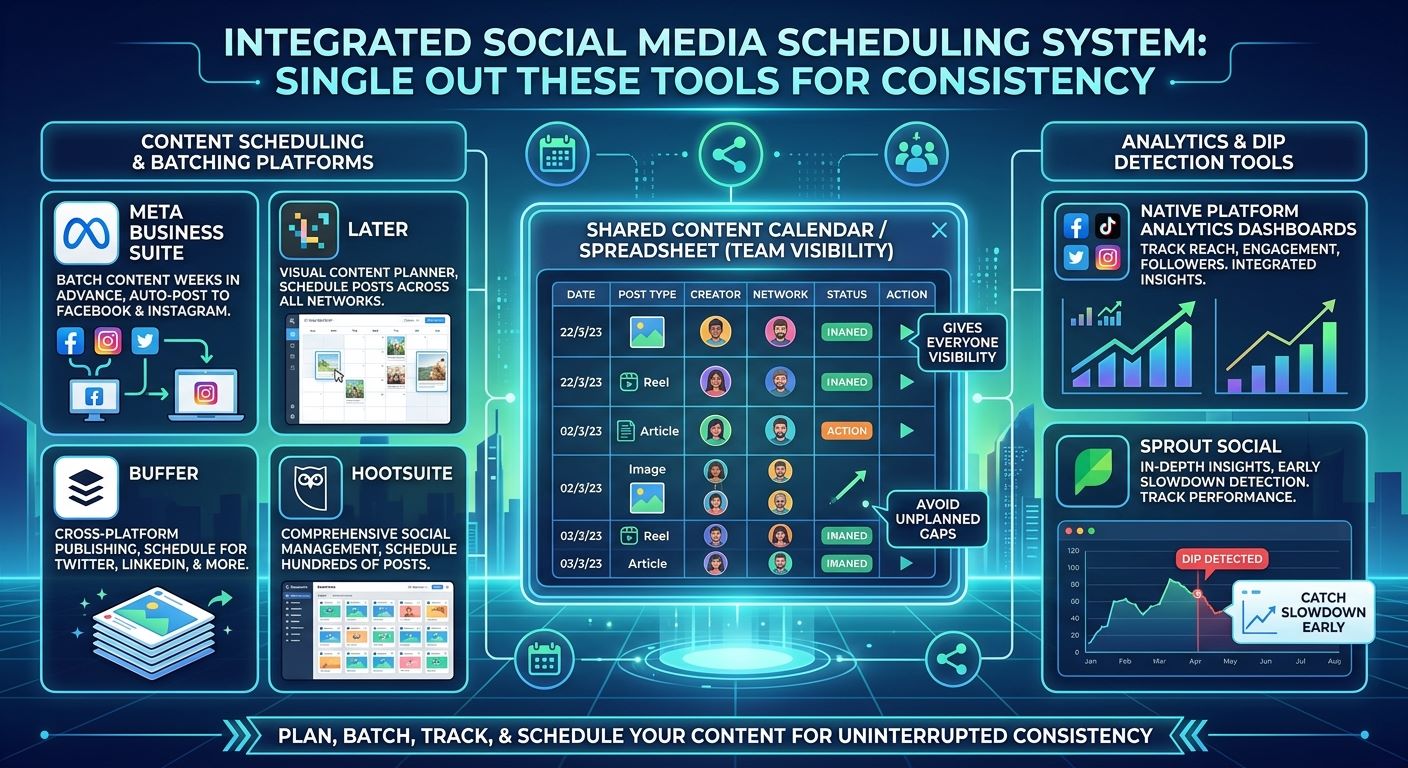
Analytics dashboards built into each platform, along with tools like Sprout Social, help track when your reach and engagement start to dip so you can catch a slowdown early rather than after a full month has passed.
A simple content calendar, even a shared spreadsheet, is often the single most effective tool for avoiding an unplanned gap. It gives everyone on a team visibility into what is scheduled, what is missing, and who is responsible for filling it. social
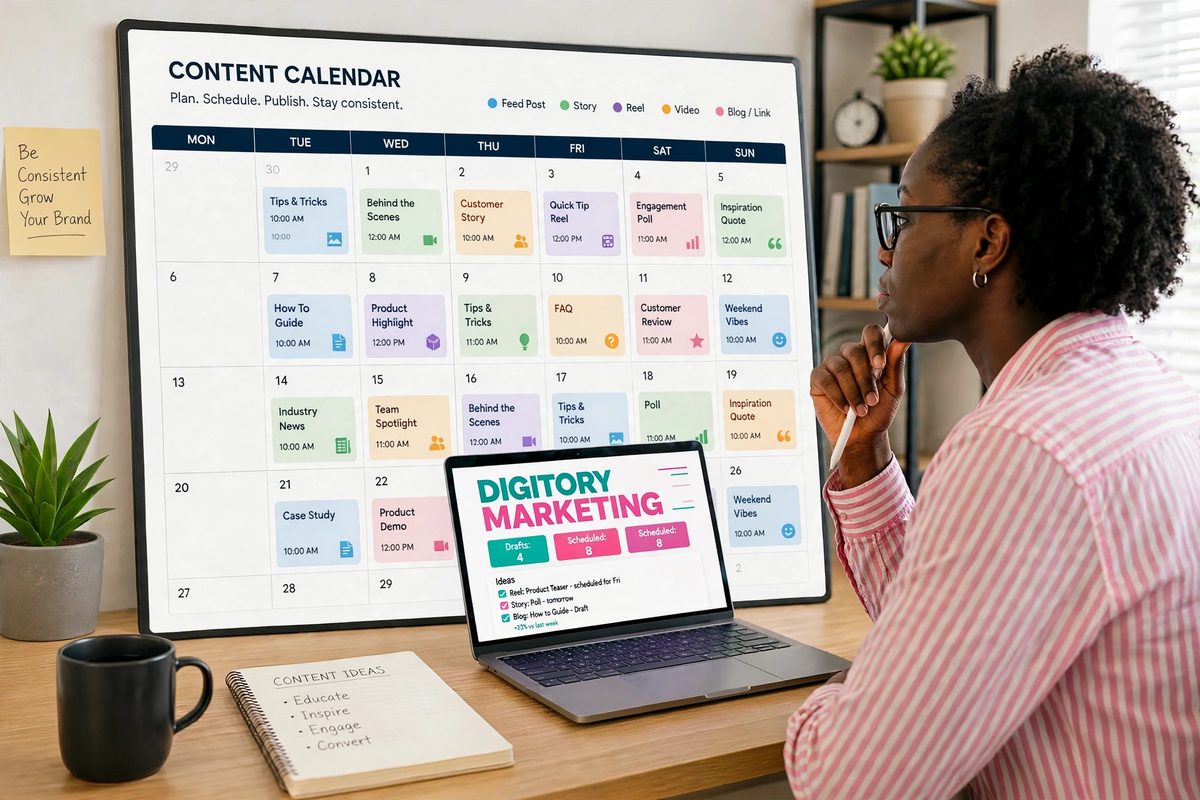
For solo creators, setting aside one afternoon a week to batch captions and visuals for the week ahead removes the daily pressure that usually causes people to stop posting on social media in the first place.
Pairing a content calendar with a scheduling tool means a break, if it happens, is a planned decision rather than something that sneaks up on the account.
Future Trends: How Platforms Are Handling Inactivity
Platforms continue to shift toward rewarding consistent, relevant content over pure posting frequency. Newer algorithm updates across major platforms increasingly weigh watch time, saves, and shares more heavily than raw posting volume, which means quality consistency matters more than posting every single day.
This is a small but meaningful shift for anyone worried about what happens when they stop posting on social media: it suggests platforms are moving away from punishing gaps and toward rewarding strong content whenever it is posted, which favors brands that plan around quality rather than chasing a daily streak out of fear.
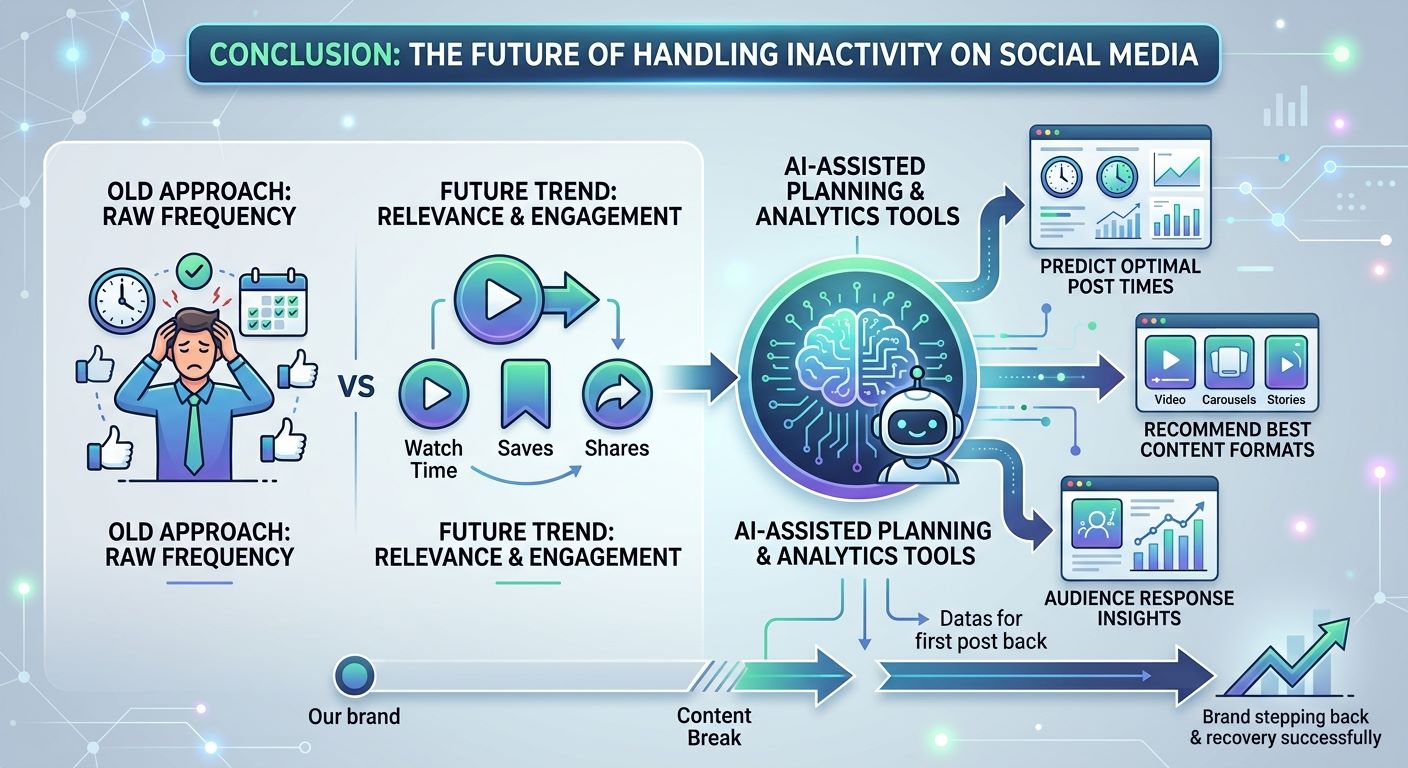
There is also a growing shift toward AI-assisted content planning, where brands use scheduling and analytics tools to predict the best times and formats to post rather than guessing. As these tools become more common, the accounts that recover fastest from a gap will likely be the ones using data to decide what to post first, rather than simply flooding the feed with whatever is ready.
Expect platforms to keep rewarding relevance and audience response over raw frequency, which is good news for brands that occasionally need to step back without losing everything they built.
Bringing It All Together
Stepping away from social media for a month will not wipe out your follower count, but it will quietly cost you reach, engagement, and momentum that takes time to rebuild. T
he accounts that recover fastest are the ones that plan the break, stay minimally responsive to their existing audience, and come back with a clear content plan instead of a rushed content dump.
If you are managing this for a brand rather than a personal account, treating consistency as a strategy rather than a habit to feel guilty about will save you the stress of wondering what a quiet month actually cost you.
Digitory Marketing helps brands build content calendars and posting systems that hold up even when life gets busy, so growth does not stall the moment things get hectic.
Key Takeaways
- Your follower count barely moves after a one-month posting break; the real cost is reach and engagement.
- Algorithms deprioritize inactive accounts because they lack fresh engagement signals, not as a punishment.
- Reach and engagement drop first and fastest; follower count is a slow-moving, lagging metric.
- A planned, short break with some ongoing interaction recovers much faster than an unplanned, unexplained gap.
- Coming back with a rushed content dump often hurts more than the original gap did.
- Scheduling tools and a simple content calendar are the most effective ways to avoid an accidental gap.
Frequently Asked Questions
1. Will I lose followers if I stop posting for a month?
Not significantly. Most accounts see little to no drop in follower count from a single month of inactivity. The bigger impact is on reach and engagement, not the follower number itself.
2. Does the algorithm punish accounts for taking a break?
No. There is no evidence platforms actively penalize inactive accounts. The algorithm simply has less recent engagement data to work with, so it distributes your content more cautiously until you rebuild activity.
3. How long does it take to recover reach after a posting gap?
Most accounts see reach recover within two to three weeks of consistent posting after returning, though this varies by platform and how engaged the audience remained during the gap.
4. Is it better to post low-quality content than to stop posting on social media entirely?
Not necessarily. A short, planned break with occasional audience interaction usually outperforms forcing out weak content just to maintain a streak. Quality and a clear return plan matter more than perfect daily posting.
5. Which platforms are most affected by a posting gap?
Instagram and TikTok tend to show the fastest reach drop after inactivity because they rely heavily on short-term engagement signals. LinkedIn and Facebook are somewhat more forgiving, especially for individual profiles.
6. What should I do before taking a planned social media break?
Schedule a few posts in advance, if possible, let your audience know you will be back, and plan your first few posts for your return so you are not scrambling once the break ends.
Contact us at https://www.digitorymarketing.com and let's work together!