Introduction
If you run a small or growing business, you have probably asked yourself the same question more than once: should you keep posting on Instagram yourself, or is it time to bring in a marketing service to take it off your plate? The DIY social media vs hiring an agency debate does not have one right answer. It depends on your budget, your time, your goals, and how fast you want to grow. This article breaks down both paths honestly, including what each one actually costs you, so you can make a decision that fits your business today, not someone else's business.
This is one of the most common questions small business owners ask when their marketing starts to outgrow what one person can manage alone. Weighing DIY social media vs hiring an agency is not really about which option is objectively better. It is about matching the option to where your business actually stands right now and being willing to change that answer later as things grow.
What "DIY Social Media" Actually Means
DIY social media means you, or someone on your existing team, handles everything. That includes:
- Planning what to post and when
- Writing captions
- Designing graphics or filming short videos
- Responding to comments and messages
- Running any paid ads
- Checking what is working and adjusting
Free and low-cost tools have made this more doable than it used to be. Canva handles most of the graphic design needs of a small business without any design background. CapCut makes short-form video editing fast enough to do between other tasks. Meta Business Suite and similar scheduling tools let you plan a week of content in one sitting instead of posting in a panic every morning.
DIY social media management for small business owners is a completely legitimate strategy, especially early on. It costs little beyond your time, and it forces you to understand your own audience directly, which is valuable even after you eventually hand the work off to someone else.
The tradeoff is time and consistency. Social media rewards regular posting and quick replies, and both take real hours every week. If you are already stretched thin running the rest of your business, DIY social media can quietly slip down the priority list, and inconsistency tends to hurt results more than imperfect content does.
What a Social Media Marketing Service Actually Does
A social media marketing service, whether that is a full agency or an individual specialist, typically covers six core areas:
- Strategy: figuring out what platforms matter for your audience and what you are actually trying to achieve
- Content creation: writing, design, photography, and video
- Community management: replying to comments, messages, and reviews
- Paid social advertising: running and optimizing ad campaigns
- Influencer or partnership outreach, when relevant
- Analytics and reporting: tracking what is working and the why
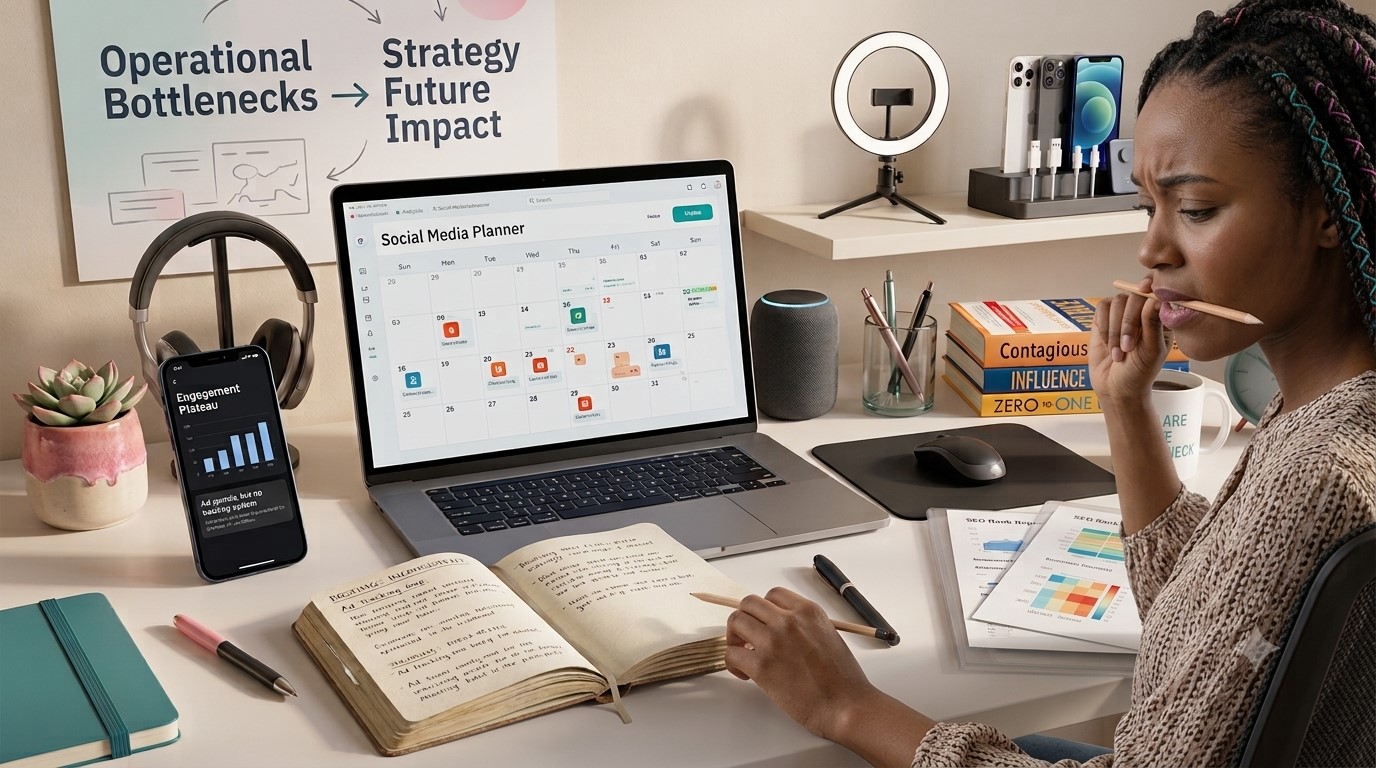
The difference between hiring a social media marketing agency and doing it yourself is not just about saving time. It is about access to a full skill set. One person rarely excels at strategy, writing, design, video editing, and ad management all at once. An agency spreads that work across specialists, so you are not depending on one person's strengths and weaknesses. With agency it is more of separation of skills amongst specialists. social-media-marketing-services-package
How Much Does It Cost to Hire a Social Media Agency?
This is usually the deciding factor, so let's be direct about it.
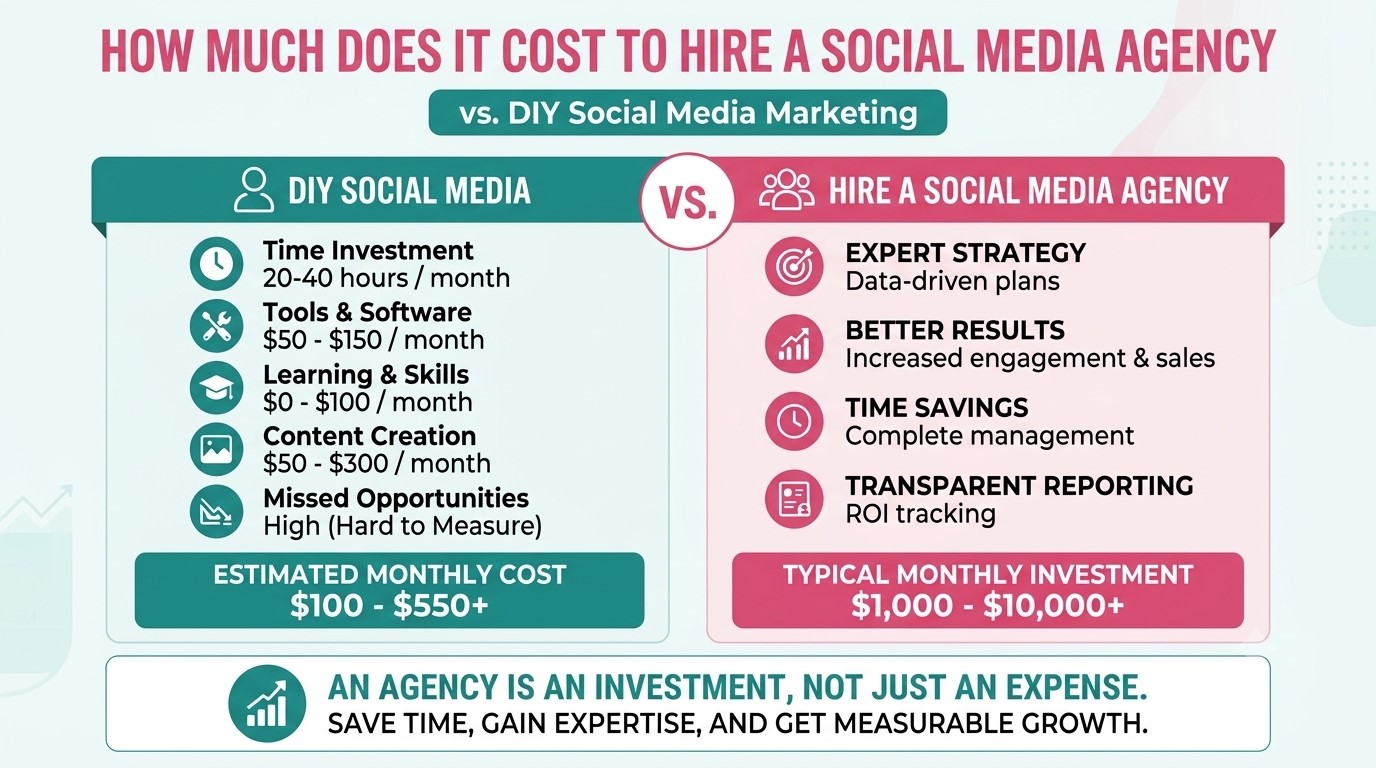
Hiring a full-time, in-house social media manager is typically the most expensive route once you add salary, benefits, and the cost of tools and software. A part-time or fractional specialist costs meaningfully less and can be a good middle step for businesses that have outgrown DIY but are not ready for a full agency retainer. A full-service agency retainer costs more per month than a fractional hire, but it replaces an entire team's worth of skills with one line item, and there is no payroll, benefits, or turnover risk to manage.
DIY, by comparison, is close to free in cash terms. The real cost is your time and, often, a slower or less consistent output because social media competes with everything else you are responsible for running.
When people compare DIY social media vs hiring an agency purely on price, DIY usually looks like the obvious winner. But price is only part of the picture. Time spent on content is time not spent on the parts of your business only you can do. social-media-management-tools
When Should You Hire a Social Media Agency?
There is no universal revenue number that triggers this decision, but a few signals tend to show up consistently:
- Your posting has become inconsistent because something else always takes priority
- You are running ads but have no real system for tracking what is working
- You want to expand to a new platform but do not have time to learn it properly
- Engagement has plateaued and you are not sure why
- You are the bottleneck. Nothing goes out unless you personally write or approve it
If none of those apply yet, and you are still figuring out your brand voice or testing what your audience responds to, DIY is often still the right call. Hiring a social media marketing service before you understand your own audience can mean paying someone to guess on your behalf.
It also helps to think about opportunity cost, not just line-item cost. If every hour you spend writing captions is an hour you are not spending on sales calls, product development, or clients, the real cost of staying DIY can end up higher than an agency retainer, even though no invoice shows up for it.
DIY vs Fractional vs Full Agency: The Middle Path Most People Miss
The DIY social media vs hiring an agency conversation often gets framed as a binary choice, but there is a real middle option that more small businesses are choosing in 2026: a fractional or part-time specialist. This is someone who manages your social media a few hours a week without the cost of a full agency retainer or a full-time salary.
This middle path works well for businesses that have grown past what the owner can manage alone but are not yet at the scale where a full agency team makes financial sense. It is also where AI tools are having the biggest impact right now. AI can help draft captions, generate content ideas, and speed up editing, which means a single fractional specialist can now realistically manage more than they could a few years ago.
One thing worth flagging honestly: some agencies lean entirely on AI with little human oversight. That can look impressive in a sales pitch, but brand voice tends to drift, and content starts to feel generic within a few months. The agencies and specialists getting the best results in 2026 use AI to move faster, not to replace judgment about what actually fits your brand.
Common Mistakes in the DIY vs Hire Decision
Comparing only price, not time. DIY looks cheap until you calculate what your own hours are worth.
- Hiring an agency too early, before you have a clear sense of your own brand voice or audience.
- Hiring an agency too late, after burnout has already caused inconsistent posting and lost momentum.
- Judging results by followers and likes instead of leads, sales, or repeat customers, whether you are doing it yourself or paying someone else.
- Assuming one option is permanent. Plenty of businesses start DIY, move to fractional support as they grow, and eventually bring on a full agency. It is a progression, not a one-time decision.
None of these mistakes are unusual. Most business owners make at least one of them before they land on the approach that actually fits. The goal is not to get the DIY social media vs hiring an agency decision perfect on the first try. It is to notice when the current approach has stopped working and adjust before it costs you momentum.
Best Practices No Matter Which Path You Choose
Set a clear goal before you post anything, whether that is leads, sales, brand awareness, or customer retention
- Track outcomes that actually matter to your business, not just engagement numbers
- Stay consistent. An irregular posting schedule undercuts good strategy every time
- Revisit the decision every few months. What worked at launch may not work once you are busier or bigger
- If you do hire outside help, ask how they measure success and make sure it matches your actual goals, not just platform activity
How Do You Know If Your Social Media Is Actually Working?
Whether you are managing it yourself or paying a service, the real test is not follower count. Ask instead: is this generating leads, sales, or repeat business? A smaller, engaged audience that converts is worth more than a large one that never buys anything. If you cannot answer what social media is doing for your bottom line that is usually the clearest sign it is time to either change your approach or bring in outside expertise to help you track it properly.
Tools and Resources worth Knowing About
Whichever path you choose, a few tools come up again and again in this decision:
- Canva and CapCut for design and short-form video, useful whether you are DIY or supplying an agency with brand assets
- Meta Business Suite or a scheduling tool like Buffer or Later for planning content in batches instead of daily
- Google Analytics 4 and platform-native insights for tracking what actually drives traffic and conversions, not just engagement
- A simple shared tracking sheet or dashboard, so results are visible whether you are managing things yourself or reviewing a service's reporting
Where This Is Heading
Expect the line between DIY and agency-managed social media to keep blurring. AI tools are lowering the skill floor for solo business owners to produce decent content quickly, while agencies are using the same tools to handle more accounts without losing quality, as long as a real strategist is still steering. The businesses that get the most out of either path in the next few years will be the ones that stay focused on outcomes like leads and sales, rather than getting caught up in tool trends or vanity metrics.
Summary
There is no single right answer in the DIY social media vs hiring an agency decision. Early-stage businesses often do best start with DIY, since it is low-cost and forces a real understanding of the audience. As a business grows, a fractional specialist can bridge the gap, and a full agency becomes worth the investment once social media has grown too big for one person to manage well.
The right move is the one that matches where your business is today, not where you hope to be in a year. Reassess the DIY social media vs hiring an agency question every few months, and do not be afraid to change paths as your needs change.
FAQ Section
1. Should I do my own social media marketing?
If you are early-stage or just starting out, yes, DIY social media is a reasonable place to begin. It costs little beyond your own time and helps you understand your audience directly before handing that knowledge off to anyone else.
2. How much does it cost to hire a social media agency?
Costs vary widely based on scope, from a few hundred dollars a month for a fractional specialist to several thousand for a full-service agency retainer. In-house hires typically cost the most once salary and benefits are included.
3. What's the difference between a social media manager and an agency?
A social media manager is usually one person handling most or all tasks. An agency spreads the work across specialists in strategy, content, design, ads, and analytics, so you are not relying on one person's full skill set. in-house-team-or-agency
4. When is the right time to switch from DIY to hiring help
Common signals include inconsistent posting, plateaued engagement, running ads without a way to track results, or wanting to expand to a new platform without the time to learn it properly
5. What is a fractional social media manager?
A fractional social media manager works part-time on your account, offering more support than pure DIY without the cost of a full agency retainer. It is a common middle step for growing businesses.
6. How do I know if my social media strategy is working?
Look past likes and followers. The real measure is whether your social media activity is generating leads, sales, or repeat customers for your business.
Key Takeaways
- DIY social media works well for early-stage businesses with limited budgets and evolving brand voices.
- A social media marketing service brings a full team of specialists instead of relying on one person's skill set.
- Cost comparisons should account for time, not just cash spent.
- A fractional or part-time specialist is a practical middle step between DIY and a full agency.
- Watch for signals like inconsistent posting, plateaued engagement, or untracked ad spend as cues it may be time to hire help.
- Measure success by leads and sales, not follower count, regardless of which path you choose.
This is not a permanent decision. Revisit it as your business grows.
Let's work together at https://www.digitorymarketing.com